New acquisitions to the Astrup Fearnley Collection in 2025
Every year, the Astrup Fearnley Collection is expanded through new acquisitions, and in 2025 the collection grew by a total of 67 works.
Below is a selection of some of the artists and works acquired last year. Among them, Eva Gold, Arthur Jafa, Marius Engh, and Lindokuhle Sobekwa are represented in the collection for the first time, while works from other artists further develop existing holdings. A complete list of all works acquired in 2025 is provided at the end.
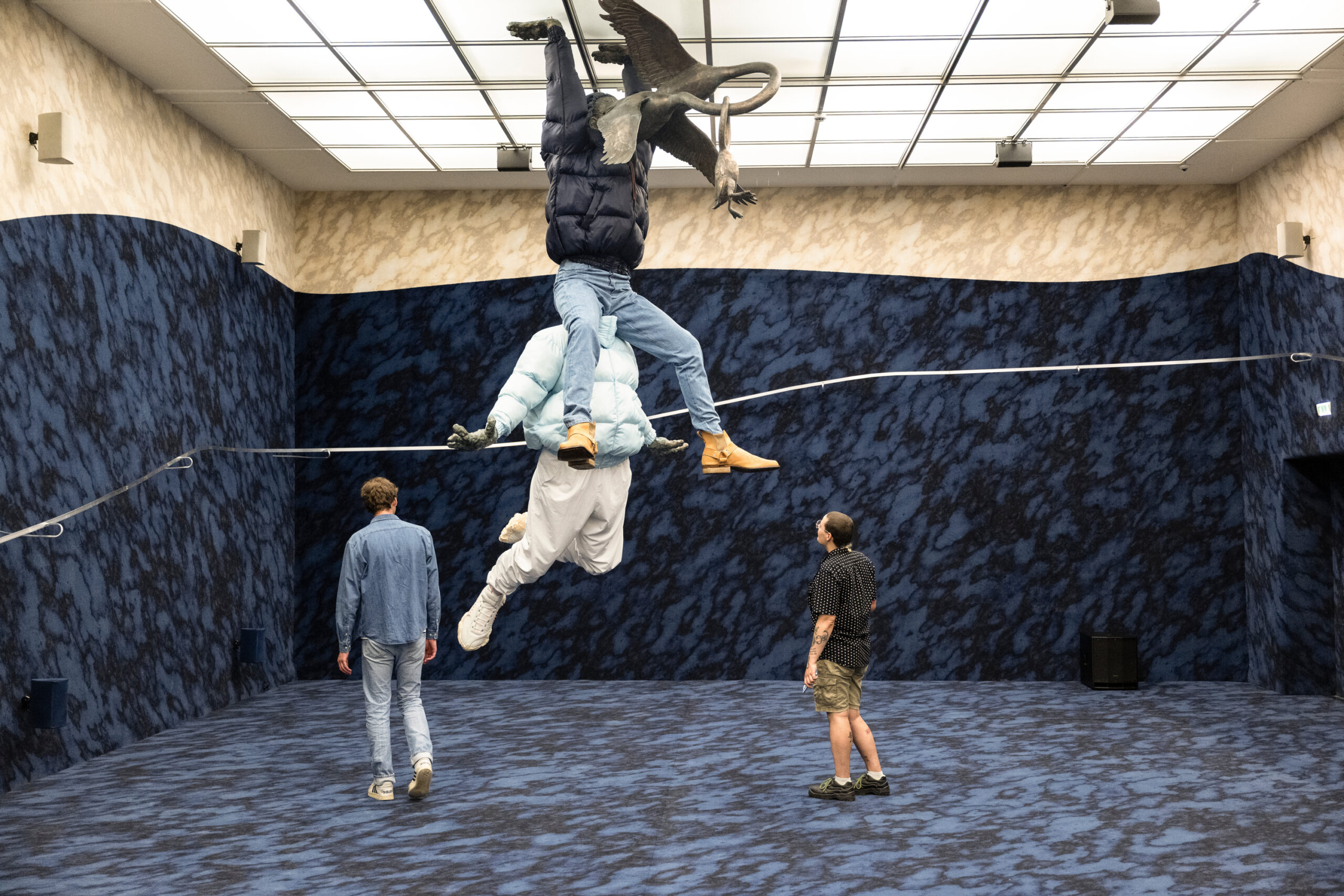
Tori Wrånes (b. 1978) combines performance, sculpture, sound, installation, video, and architectural elements in her practice. Her works frequently give rise to dreamlike, ritualistic, and surreal worlds that engage the body, voice, and spatial experience. One of the works acquired for the collection, Mothers and Child II (2025), was included in The Festival Exhibition Moon Bag at Bergen Kunsthall in 2025. The sculpture consists of two oversized, intertwined bodies that appear suspended or floating vertically, with dramatic, exaggerated forms suggesting a moment of tension—an ascent or descent in space. Mothers and Child II is not merely a figurative sculpture but a psycho-spatial exploration of the extremes of human relationships, using scale and surreal form to render visible emotional and physical complexity.
Reviewing the 2025 festival exhibition, Morgenbladet critic Espen Hauglid wrote: “If one is not uplifted by Tori Wrånes in Bergen, one may be suffering from chronic grumpiness.”
Eva Gold (b. 1994) is a British artist based in London, known for an interdisciplinary practice encompassing sculpture, installation, drawing, video, text, and narrative works. Her practice revisits questions of storytelling, materiality, and human presence, unfolding through atmospheres that are both cinematic and conceptually charged. Gold’s works often draw attention to what remains unseen, unspoken, or just beyond the threshold of perception.
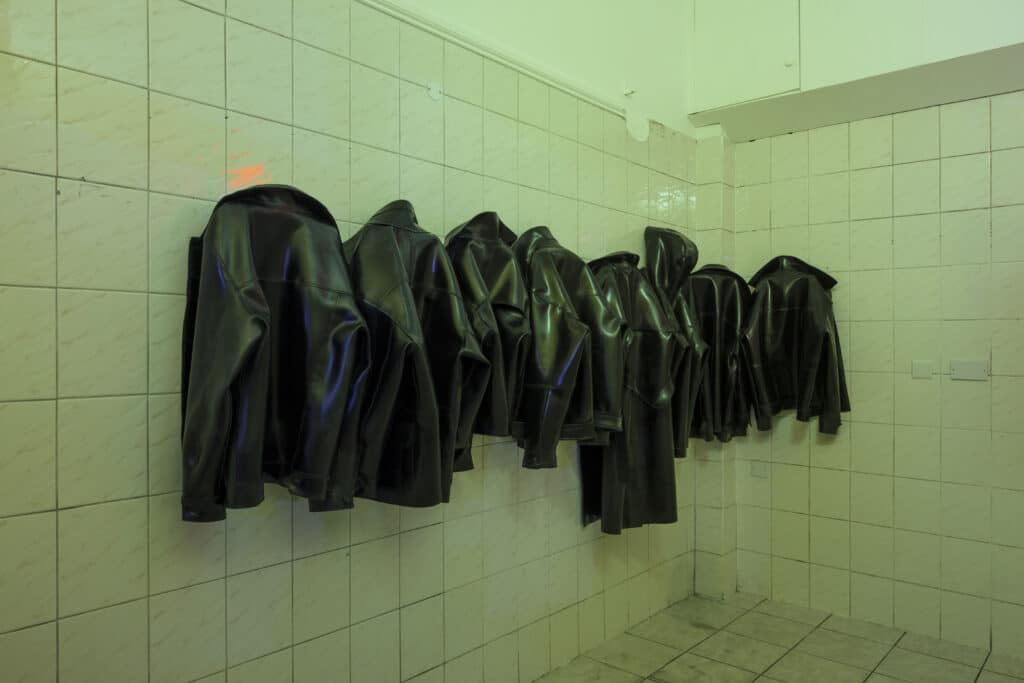
Cowboys (2022), acquired for the collection, is a key work from The Last Cowboys project, presented as part of her solo exhibition at Ginny on Frederick gallery, London (April–May 2022). The work exemplifies several recurring concerns in her practice, including sexuality, presence and absence, narrative, and material transformation.
Wolfgang Tillmans (b. 1968) is widely regarded as one of the most influential contemporary photographers of his generation. His practice ranges from documentary and experimental photography to installation, abstraction, and at times moving image and sound, consistently driven by a deep engagement with how images shape perception, identity, community, and politics.
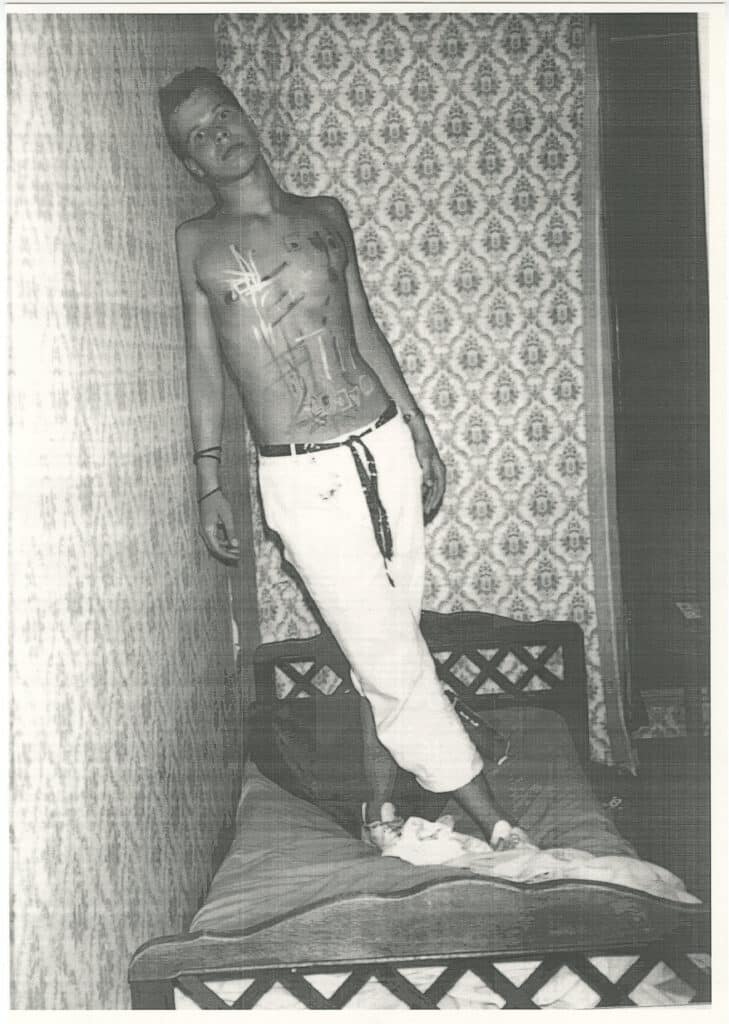
The work Nizza (1986), acquired for the collection, is an inkjet print on paper. The title refers to the Italian name for the city of Nice, suggesting a geographical or experiential point of reference. The work exemplifies Tillmans’s early artistic interest in place, presence, and the expressive potential of photography, while also anticipating his later position, in which the boundaries between social documentation, fine art, and personal vision are dissolved—always grounded in the conviction that photography is shaped not by neutrality but by intention and experience.
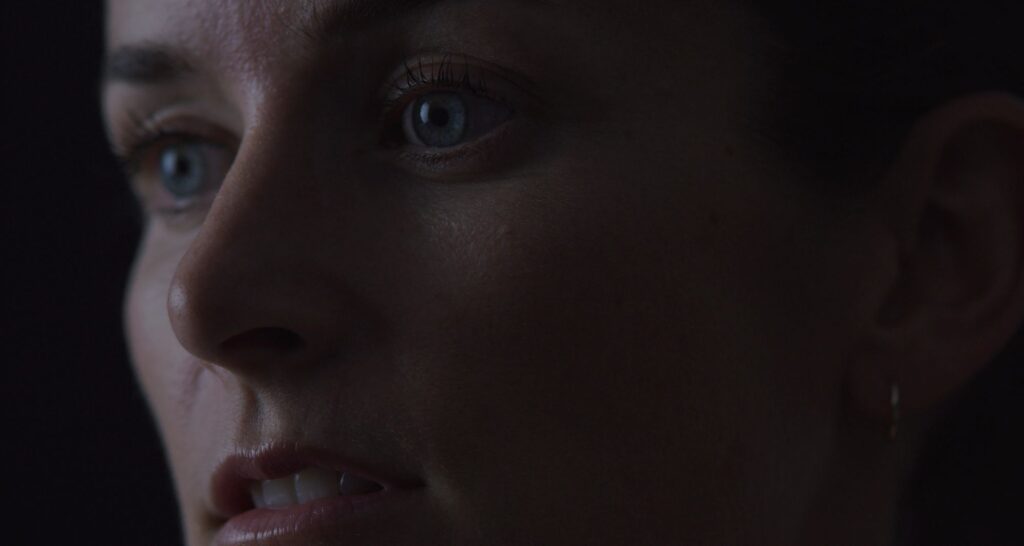
Arthur Jafa (b. 1960) is an American filmmaker, visual artist, and cinematographer. His work constitutes a powerful investigation of race, identity, media, and cultural belonging. He is particularly known for experimental moving-image works that remix found footage, documentary material, and internet content into charged audiovisual collages. The 40-minute film The White Album (2018) has been described as a “social critique of whiteness.” Composed of both found and produced video material, the film articulates how Black culture, ideas, and labor have historically been absorbed into white culture through coercion and violence. As a video collage, The White Album functions both as an artwork and a critical confrontation, transforming the logic of found footage and remix culture into a contested space in which whiteness, violence, and love are intertwined. Viewers are challenged not only to consider what they see, but how and why they are seeing it.
The White Album (2018) is jointly owned by the National Gallery of Canada, the Hammer Museum, Los Angeles, through the Board of Advisors Acquisition Fund, and Astrup Fearnley Museet.
Over the years, Jafa has developed a close professional collaboration with Norwegian artist Frida Orupabo, and was instrumental in introducing her work to an international art audience in 2017. In 2019, the two artists presented a joint exhibition at Kunstnernes Hus in Oslo.
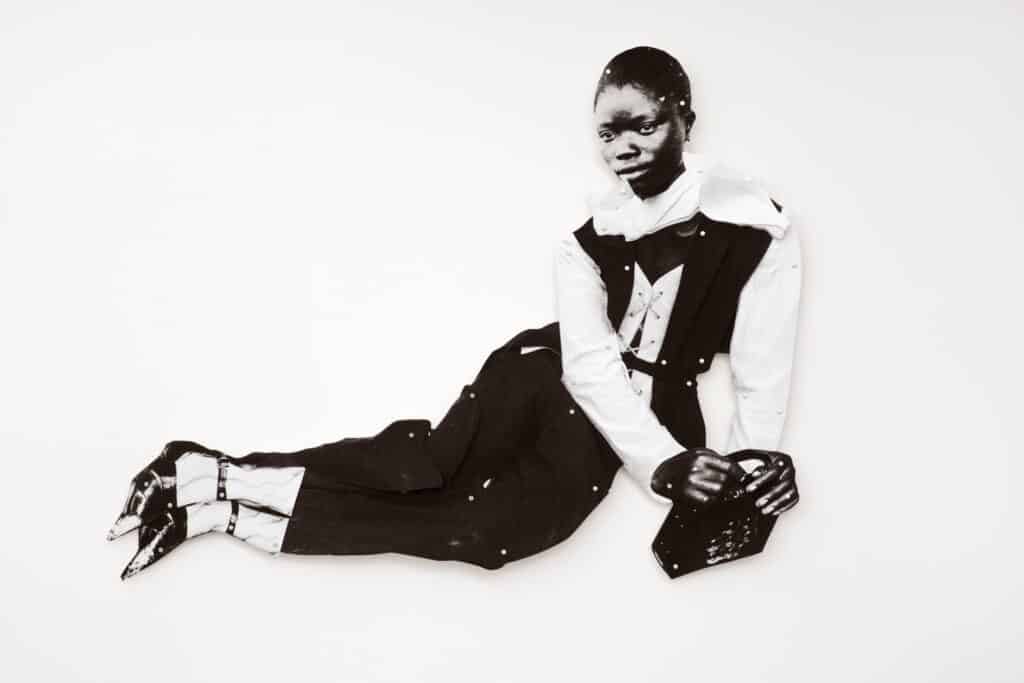
Frida Orupabo (b. 1986) examines colonial history, race, and gender through digitally assembled collages and sculptural installations. Drawing on archival photographs, ethnographic imagery, and personal collections, she fragments and reconfigures bodies to expose how Black subjects have historically been objectified and controlled. Her figures often appear divided, suspended, or bound, emphasizing both vulnerability and resistance. Orupabo’s practice reveals the violence embedded within visual archives, while reclaiming the image as a site of agency and opposition.
Four of her works have been acquired for the collection: Black purse (2024), What’s a friend (2024), Of course everything is real (2024), and Two Women (2021). All were included in the exhibition On Lies, Secrets and Silence at Astrup Fearnley Museet (February–April 2025). The exhibition was described by Dagsavisen critic Lars Elton as “a compelling demonstration of artistic weight.”
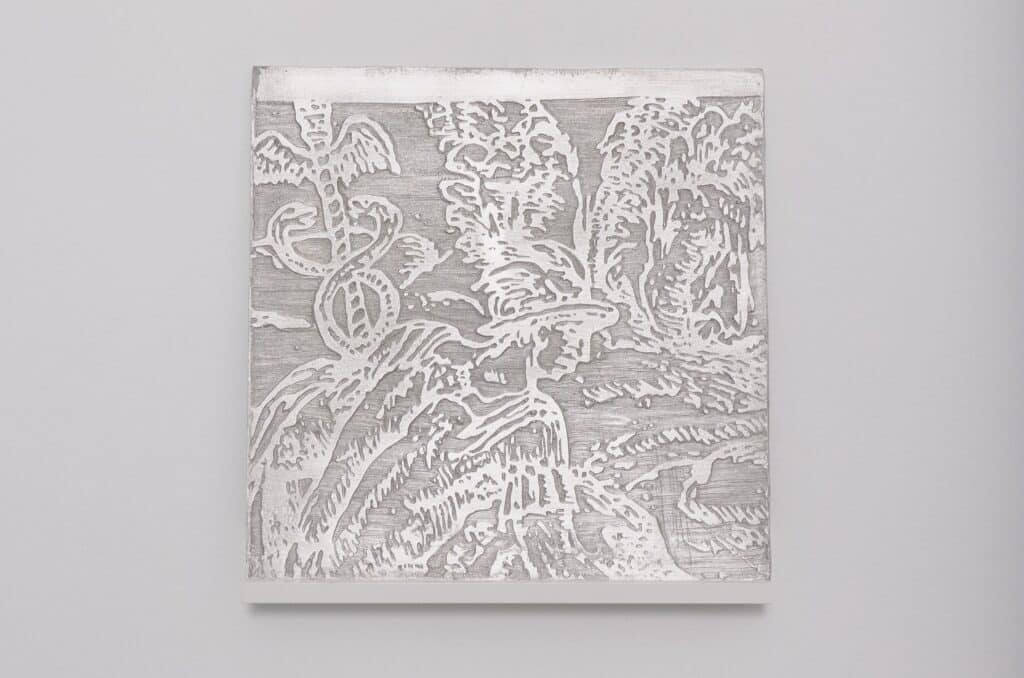
Marius Engh (b. 1974) works across a wide range of media, including sculpture, installation, photography, text, printmaking, and publications. Through a conceptual and visual language, he holds up a mirror to the present in which the past is reflected, casting shadows and inviting further inquiry. Grounded in extensive research and fieldwork, Engh activates historical materials and symbols, allowing them to emerge in new contexts.
Three of his works have been acquired for the collection: Herm (Strange Bird) (2025), Herm (Quadrigeminal Cistern) (2025), and Emblemata (Crossroad) #1–4 (2025). All were included in the exhibition The Sign of Four, presented at Oslo Kunstforening (August–October 2025).
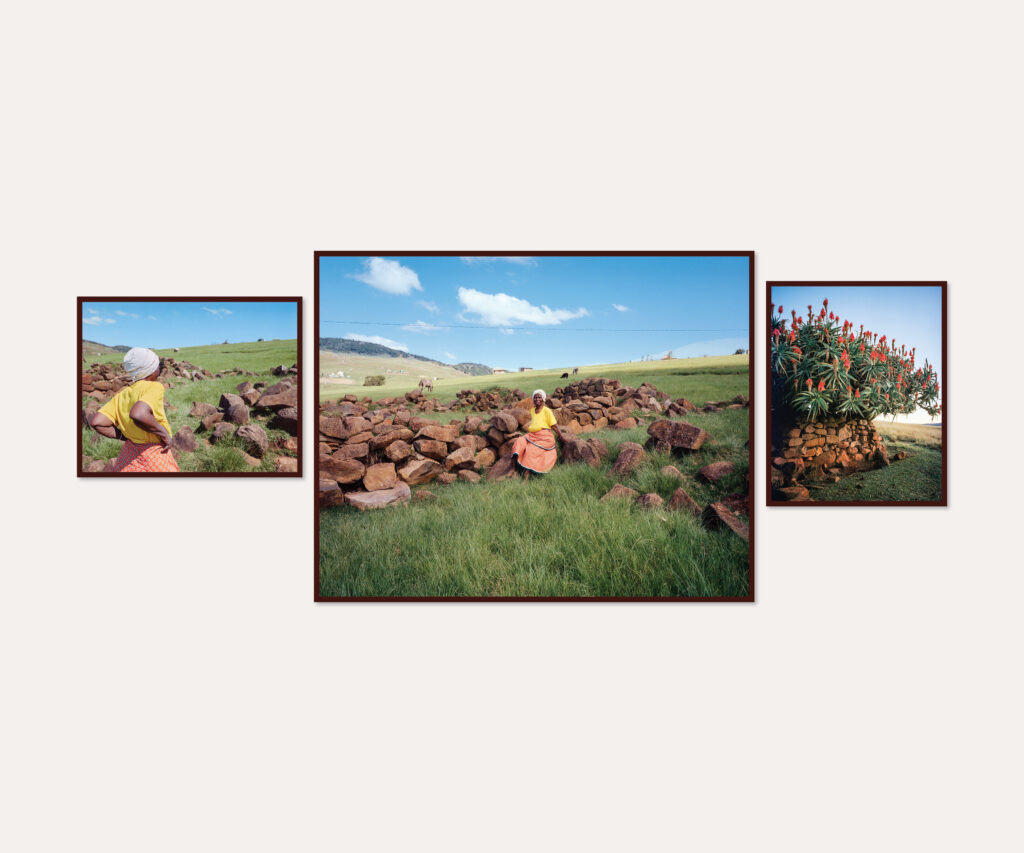
Lindokuhle Sobekwa (b. 1995) is a South African documentary photographer whose work explores family, loss, and the enduring aftereffects of apartheid through deeply personal narratives. Drawing on his own experiences, Sobekwa uses photography as a process of searching and remembrance, often combining documentary images with handwritten notes, text fragments, and archival photographs. His projects revolve around absence, addiction, and unresolved trauma. Rather than offering definitive conclusions, his works resonate with an unresolved uncertainty. The images are quiet yet emotionally charged, expanding the field of social documentary into an intimate and ethical practice that acknowledges both the power of photography and its limitations when confronted with grief and history.
Five of his works have been acquired for the collection: Smoking Break, Thokoza Johannesburg I & II (2022); Promised Land, Thokoza Johannesburg I & II (2022); My Grandmother’s Kraal, Cofimvaba Eastern Cape (I) (2023); My Grandmother’s Kraal, Cofimvaba Eastern Cape (II) (2023); and My Grandmother’s Kraal, Cofimvaba Eastern Cape (III) (2023).
New acquisitions to the Astrup Fearnley Collection in 2025:
Suleman Aqeel Khilji
Back & forth, 2024
Oil and pigments on linen
217 x 360 cm
Remains of the day III, 2024
Pigments, oil, and patina on found book cover mounted on panel
21 x 31 cm
Remains of the day II, 2024
Pigments, oil, and patina on found book cover mounted on panel
19 x 26 cm
Remains of the day I, 2024
Pigments, oil, and patina on found book cover mounted on panel
22 x 35 cm
—
Frida Orupabo
Black purse, 2024
Collage, paper, and paper clip mounted on aluminum
93 x 123 x 2 cm
What’s a friend, 2024
Collage, paper, and paper clip mounted on aluminum
177 x 88 x 2 cm
Of course everything is real, 2024
Metal
Dimensions variable
Two Women, 2021
12 movable individual objects overall dimensions
129 x 215 x 15 cm
—
Diamond Stingily
Bulwark (I), 2025
Cast iron and paper cups
185 x 300 cm
diamond (I), 2025
Plywood
180 x 120 x 40 cm
Repass of Sandra’s, 2022
Glossy C-print
26 x 35 cm
not yet titled, 2023
Glossy C-print
26 x 35 cm
—
Merlin James
Near, 2024
Acrylic on canvas
41 x 51 cm
Enclosure & Trees, 2003 – 2009
Acrylic on canvas
46 x 63 cm
—
Hanne Borchgrevink
Husflate, rød, 2025
Acrylic on canvas
120 x 120 cm
—
Gerda Scheepers
ROOF (III), 2024
Acrylic roof paint and acrylic ink on canvas
300 x 220 x 5 cm
—
Isabella Ducrot
The Visited Land IV, 2025
Pigments, meteorite pigment and collage on Japan paper
245 x 394 cm
—
Franco Fontana
Ibiza, 1972
Chromogenic print on Kodak paper
22 x 34 cm
Adriatico, 1975
Chromogenic print on Kodak paper
17 x 26 cm
—
Luigi Ghirri
Harlem, 1973
Chromogenic print
19 x 29 cm
Venezia, 1978
Chromogenic print on glossy paper
30 x 20 cm
—
Matthew Barney
Wall Rack: sanguine, 2024
Ceramic and two synthetic dyed NFL jerseys
105 x 79 x 36 cm
—
Virginia Chihota
Munoonei kana makanditarisa nhai Mwari? What do you see when you look at me ohh God?, 2025
Serigraphy, indian ink and fabric ink on canvas
240 x 300 cm
—
Ser Serpas
Untitled, 2025
Oil on canvas
287 x 244 cm
—
Moyra Davey
Interest, 1989 – 2012
C-print
72 x 101 cm
Purse Strings, 1989 – 2012
C-print
72 x 101 cm
—
Kristin Nordhøy
Inverted Drawing No. III, 2025
Charcoal on paper
102 x 92 cm
—
Tori Wrånes
Mothers and Child II, 2025
Bronze, aluminium reinforcement, textile, plastic, leather, foam
420 x 220 x 260 cm
Mussles 4, 2025
Steel frames, cement and mussels
Mussles 5, 2025
Steel frames, cement and mussels
—
Marius Engh
Herm (Strange Bird), 2025
Pine plywood, acrylic paint, glass box, shoes, silver-plated cast of postage stamp motif
190 x 59 x 40 cm
Herm (Quadrigeminal Cistern), 2025
Glass sheets, water tap, drain, cast and patinated bronze, cnc-carved mdf, aluminum rods, spray paint, silver-plated cast of postage stamp motif
185 x 40 x 50 cm
Emblemata (Crossroad) # 1-4, 2025
Relief, cast tin
40 x 40 x 1 cm
—
Arthur Jafa
White Album, 2018
Video (color, sound)
29:55 min
—
Josiane M.H. Pozi
me in bed 3, 2025
Soft pastel, oil paint, acrylic paint, graphite and felt-tip pen on paper
42 x 30 cm
—
Vegard Vindenes
Front LXV, 2023
Acrylic on MDF
80 x 64 x 2 cm
Front LXVIII, 2025
Acrylic on MDF
52 x 62 x 2 cm
Front XIV, 2012
Acrylic on MDF
70 x 60 x 2 cm
Front XXIX, 2016
Acrylic on MDF
68 x 64 x 2 cm
Front XXX, 2016
Acrylic on MDF
74 x 64 x 2 cm
—
Christopher Williams
Mustafa Kinte (Gambia)
Camera: Makina 67 506347
Plaubel Feinmechanik und Optik GmbH
Borsigallee 37
60388 Frankfurt am Main, Germany
Shirt: Van Laack Shirt Kent 64
41061 Mönchengladbach, Germany
Dirk Schaper Studio, Berlin
July 20, 2007, 2008
Gelatin silver print
51 x 41 cm
Model #105M – R59C
Keystone Shower Door
57.4 × 59 ̋ Chrome/Raindrop
SKU #109149
#96235. 970 – 084 – 000
(Meiko)
Vancouver, B.C.
April 6, 2005 (No. 2), 2005
Gelatin silver print
41 x 51 cm
—
Wolfgang Tillmans
Nizza, 1986
Chromogenic print mounted on Dibond in artist’s frame
206 x 145 x 6 cm
—
Miriam Cahn
gezeichnet, 2022 + 15.1.24, 2022 – 2024
Oil on canvas
121 x 76 x 2 cm
—
Eva Helene Pade
Opløst (Dissolved), 2025
Oil on canvas
40 x 30 cm
—
Lindokuhle Sobekwa
Smoking Break, Thokoza Johannesburg I & II, 2022
Inkjet print on Baryta
50 x 40 cm & 40 x 50 cm
Promised land Thokoza Johannesburg I & II, 2022
Inkjet print on Baryta
100 x 80 cm & 100 x 80 cm
My Grandmother’s Kraal, Cofimvaba Eastern Cape I, 2023
Inkjet print on Baryta
40 x 50 cm
My Grandmother’s Kraal, Cofimvaba Eastern Cape II, 2023
Inkjet print on Baryta
80 x 100 cm
My Grandmother’s Kraal, Cofimvaba Eastern Cape III, 2023
Inkjet print on Baryta
40 x 50 cm
—
Eva Gold
Cowboys, 2022
Rubber roofing membrane
Dimensions variable
—
Albert Oehlen
Bügel, 2005
Oil and acrylic on canvas
180 x 230 cm
—
Eline Mugaas
Green Tiles, 1998
Archival inkjet print
40.0 x 60.0 cm
Cherries, 1995
Archival inkjet print
40.0 x 60.0 cm
Underwear, 1996
Archival inkjet print
60.0 x 40.0 cm
Oranges, 1994
Archival inkjet print
60.0 x 40.0 cm
Chloe in the Hallway, 1995
Archival inkjet print
45.0 x 60.0 cm
Peaches, 2019
Archival inkjet print
60.0 x 45.0 cm
Matching Pants, 1995
Archival inkjet print
40 x 60 cm
G. behind curtains, 1996
Archival inkjet print
40 x 60
Abandoned shoes, 1997
Archival inkjet print
40 x 60 cm
Car hood, 1997
Archival inkjet print
40 x 60 cm
Yellow Curtain, 1997
Archival inkjet print
40 x 60 cm
Towel in the Sand, 1996
Archival inkjet print
40 x 60 cm
Touching the Setting Sun, 2014
Archival inkjet print
111 x 149 cm
—
Per Inge Bjørlo
Vekta av lunge og kråkelyd: Tankerekke (1-9), 2011
Pencil on paper
23.0 x 23.0 x 1.0 cm
Vekta av lunge og kråkelyd, 2011-17
Stainless steel, wax, textile, glass, mirror, electric light
Dimensions variable